By Sean Liu
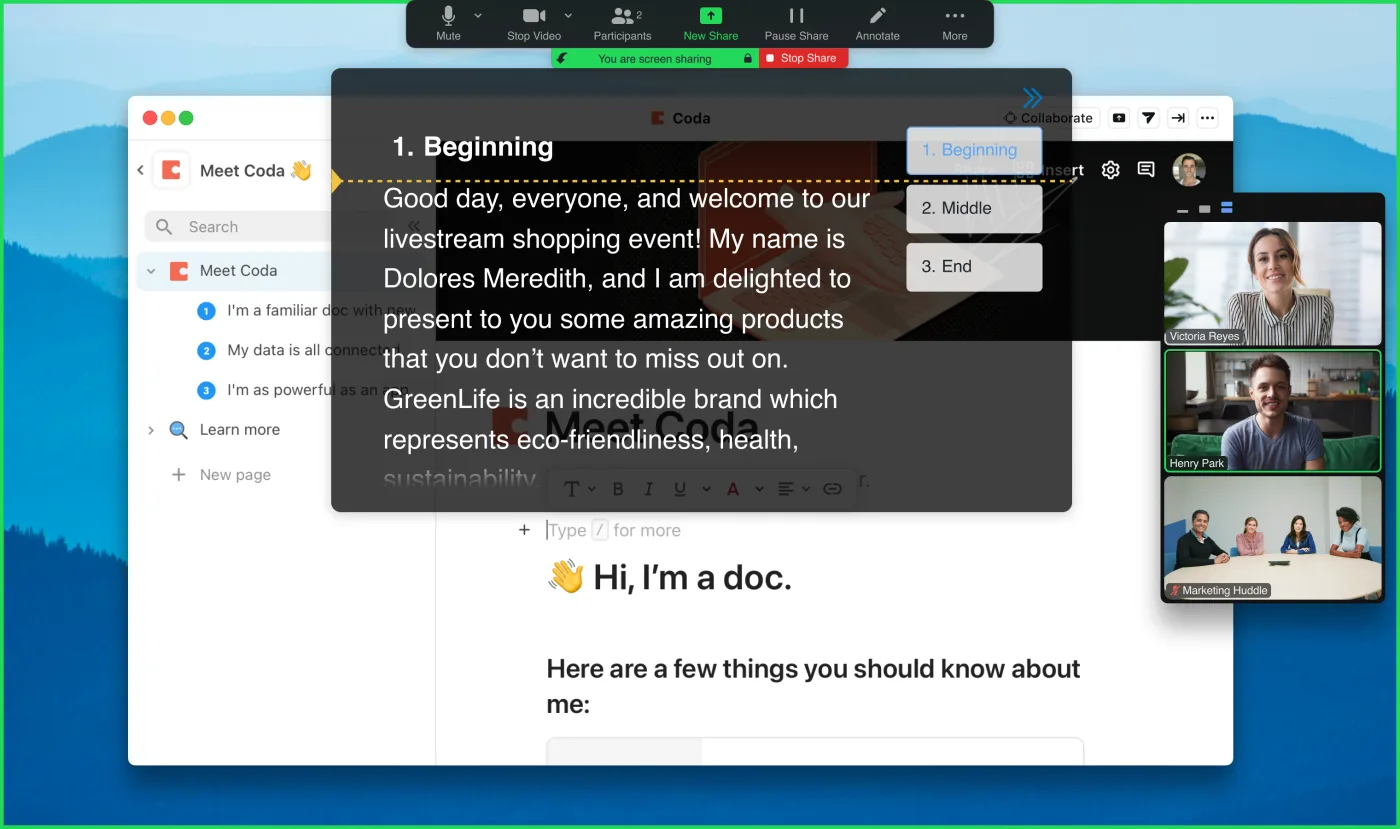
Key answer: To use Microsoft Word as a teleprompter, paste your script into a document, increase the font size to about 28 to 40 pt, switch to a clean reading view, resize the window into a narrow column, and scroll slowly while you speak. It works for practice, but it is not ideal for screen sharing or long recordings.
For a purpose-built prompt, paste the script into FlowPrompter Online. Use pricing if you need desktop invisible mode.
| Tool | Works for | Not ideal for |
|---|---|---|
| Microsoft Word | Practice, drafts, simple internal calls | Long recordings and screen-share privacy |
| FlowPrompter Online | Browser prompting and quick takes | Hiding a prompt during full-screen sharing |
| FlowPrompter desktop | Client demos, webinars, tutorials | Phone-only recording |
Format Word like a prompt
Use a large font and short lines. Break long paragraphs into spoken chunks. Do not leave the script in a normal document layout.
Put the window near the camera
Resize Word into a tall column and place it under the webcam. Your goal is simple: read without moving your eyes across the screen.
Scroll without rushing
Manual scrolling is the weak point. Use a mouse wheel or keyboard and practice once. If your hand movement distracts you, switch to a teleprompter app.
When Word is good enough
Word is fine for rehearsing, internal calls, and rough drafts. It is not the tool I would choose for a client demo, course recording, or public webinar.